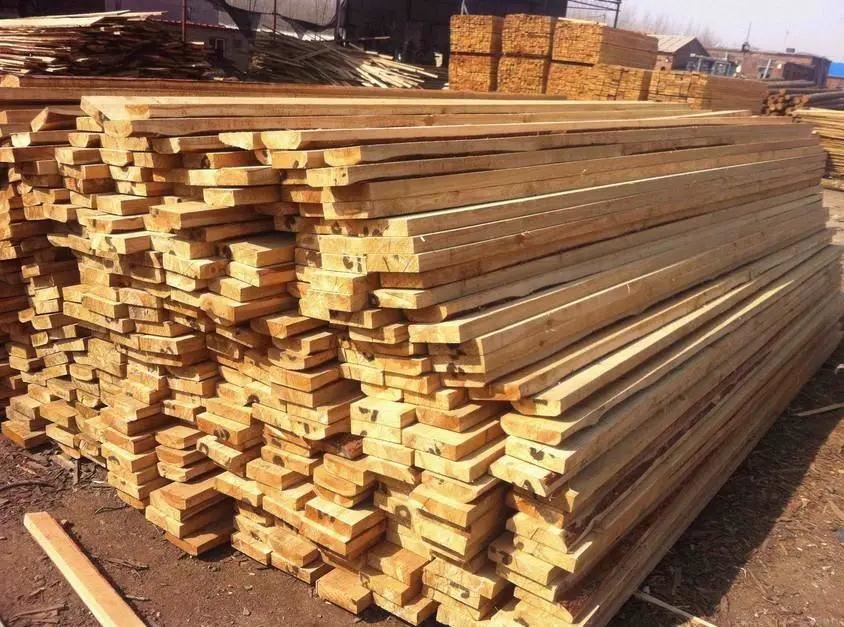
Approximately 42% of Russian timber is supplied to China, but due to the impact of the epidemic, many Russian processing plants have experienced a shortage of personnel, resulting in a sharp decline in output. The price of local logs in Russia has soared, the amount of logging has fallen, and the increase in transportation costs have caused Russian timber to rise. The fundamental factor of price!
Since the epidemic in 2020, many materials such as wood, sponge, chemical coating materials, iron, and even cardboard boxes have been subject to continuous price increases due to the impact of the international epidemic.
In particular, materials such as logs and solid wood have always been imported products that my country has relied on. However, with the continuous adjustment of policies, import and export timber prices and freight costs have continued to rise, putting great pressure on the domestic manufacturing industry.
Under such circumstances, the domestic woodworking, furniture, and flooring companies must be the first to bear the brunt. With the advancement of my country's environmental protection strategy, my country's timber output has been showing a downward trend. According to the collected data, the timber output in 2013 was 8.438 million cubic meters, and it is estimated that by 2023, my country’s timber output will drop to 58.598 million square meters.
With the development of the industry, the timber market demand will continue to grow. According to forecasts, by 2020, my country's timber demand will reach 800 million cubic meters, with a gap of about 200 million cubic meters. The gap accounts for about 25% of the overall demand. It can be said that the paper industry and the home furnishing industry are very dependent on the import of wood raw materials.
According to statistics in the first half of 2020, the volume of imported logs + sawn timber (raw timber volume) was 47,827,600 cubic meters, a year-on-year decrease of 15.1%; the import value was US$7.218 billion, a year-on-year decrease of 24.3%, and the average unit price was US$151 per cubic meter, a decrease of 10.9 %.
Timber imports from Africa, Latin America, and the United States all fell by about 30%, and Canada, the fastest-decreasing one, fell by 46%. Under such circumstances, home furnishing companies, especially board and floor companies, have been under considerable pressure in terms of materials.
In addition to the import problem, there will also be price increases. According to understanding, since 2020, the price of solid wood has increased 2 times, the price of sponge 7 times, the price of cartons 5 times, the price of iron 3 times, and the price of accessories 2 times. After the sponge enterprise issued the price increase notice, the price of sponge It has risen by more than 70%, and leather prices have followed one after another. In September, there was another wave of raw material price increases.
Nearly 80% of the wood used in the home furnishing industry is imported. Currently, major foreign ports have been closed due to the epidemic; coupled with the impact of rising domestic costs, supply gaps, environmental storms, etc., since September, wood prices have continued to range in a wide range. Rise across the board.
Judging from the current global economic situation, if the inventory is exhausted, it will become more and more difficult to import wood from Thailand, Indonesia, Russia, the United States and other places, and the cost will also become higher and higher. Labor, processing, logistics and other costs will be superimposed. , It is estimated that wood products will increase by more than 30%, and may even double.
It is understood that the domestic manufacturing industry is in the status quo of "two ends, big in and big out". Many board and floor companies are planting woodland at home and abroad to obtain quality and stable supply of wood.
Some other furniture companies also plan to go to Vietnam and other Southeast Asian countries to set up factories in order to improve their overseas layout, but this also adds to the test of the company's operating costs and layout.
As the foreign epidemic situation has not been effectively controlled, logistics has been greatly challenged, and problems such as warehouse explosions, transportation delays, and rejections have occurred frequently, and the freight rates of all routes in the global shipping market have been soaring. Factors such as poor container turnover indirectly pushed up shipping costs and reduced logistics efficiency.
It is understood that the original 20-day sailing schedule has been extended to 40 days, the 40-day sailing period has been extended to more than 60 days, and the original 50-day sailing period has been extended to 80 days.
There are still 26 days before April, but now a box is hard to find, shipping costs have risen sharply, transportation costs have increased by 300%, ocean freight has risen from US$1,000 six weeks ago to more than US$6,000, and futures prices are now hovering at high levels. , Which makes the cost of wood increased significantly.
It is expected that domestic timber prices will be high in April and May 2021 and the shortage of goods will be very serious. The government has increased land supply at the end of the year, and supply may fall short of demand. Timber prices are expected to rise strongly.