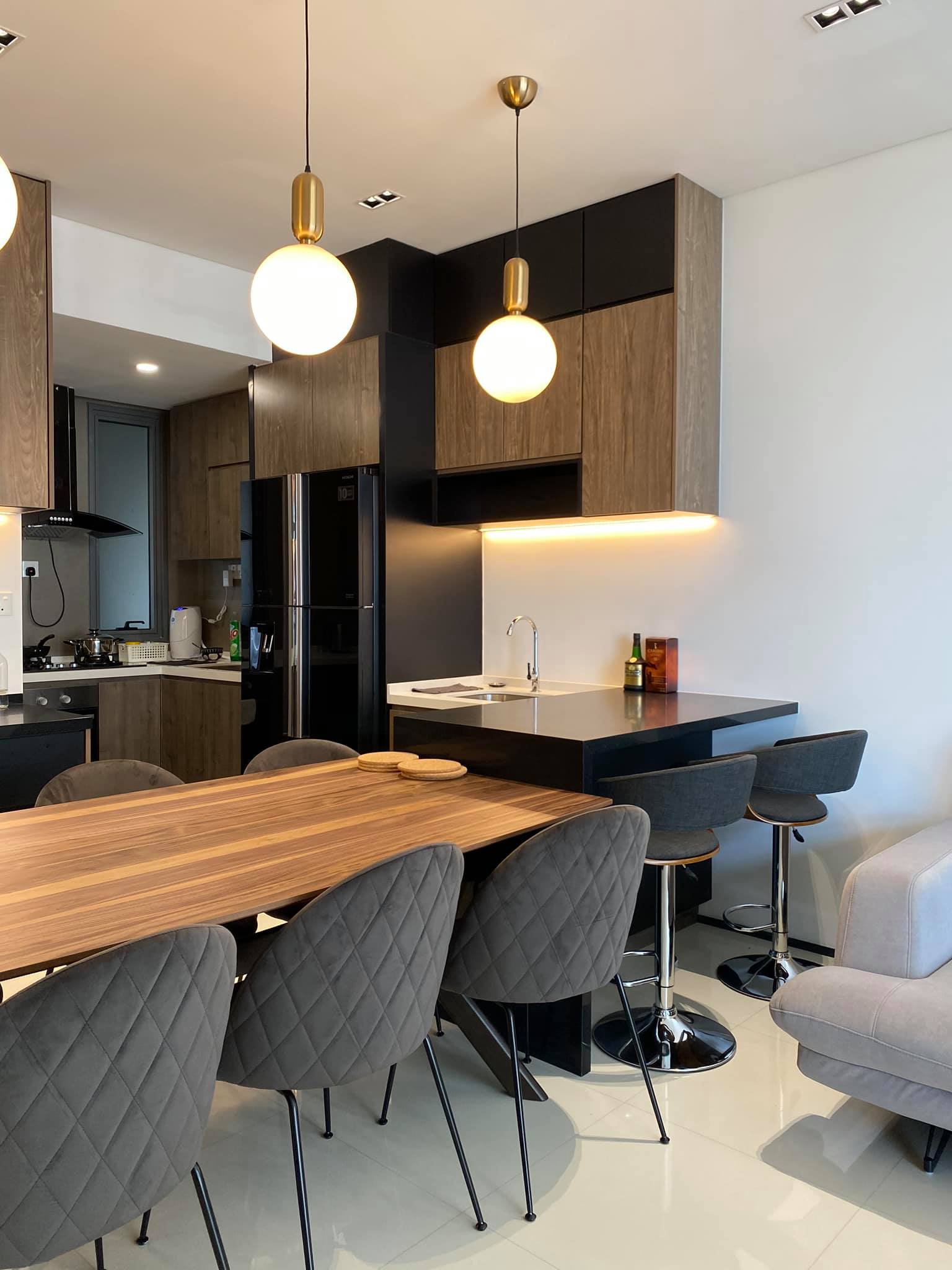
It is worth noting that although the board will not be free of toxicity after curing, whether it is environmentally friendly and whether it pollutes the air depends entirely on the substrate used. If the formaldehyde emission of the substrate does not meet the environmental protection standards, it should not be consumed by us. leading.
Even the manufacture of boards is essential to use glue, but it is harmless to the human body under a certain concentration. In the face of different board qualities, consumers should pay close attention to the formaldehyde emission of the boards used in furniture.
The general formaldehyde detection methods for plates mainly include 1. Dryer method: E0-grade formaldehyde emission ≤0.5mg/L, E1-grade formaldehyde emission ≤1.5mg/L, E2-grade formaldehyde emission ≤5.0mg/L. 2. Perforation extraction method: E0-grade formaldehyde emission ≤3mg/100g, E1-grade formaldehyde emission ≤9mg/100g, E2-grade formaldehyde emission ≤30mg/100g. Strictly speaking, only E1 and E0 grades and above can be used for indoor use, and E2 grade exports must be marked. At present, the national standard is E1 level, and the panel furniture whose formaldehyde emission is higher than the above standard should not be purchased.
In recent years, with the development of society. People's requirements for home decoration are getting higher and higher, which undoubtedly greatly promotes the rapid popularity and development of boards. With their own unique advantages, boards gradually replace ordinary solid wood products. Let me introduce to you in detail:
1. Ecological advantages: It is formed by natural inorganic raw materials through inorganic gelation technology, does not consume petrochemical organic resources, and can be recycled.
2. Performance advantages: Inorganic materials are used as the main raw materials, which are non-flammable, and have been identified as A-level materials by the state. It does not contain formaldehyde, toluene, and any harmful substances, and has the functions of strong waterproof, anti-corrosion, anti-insect, anti-mildew, and anti-freezing. The service life is 30 years.
3. Texture advantage: The surface texture is natural and the texture is beautiful, which expands the application and creative space of green ecological building materials.
4. Color advantage: The color can be freely matched and the color is lasting, providing designers with free design space.
5. Installation advantages: The material specifications can be adjusted individually, the construction process is simple and fast, and it can be pasted, just hung, and nailed.
6. Application advantages: energy saving and consumption reduction, it is a perfect substitute for solid wood, stone, metal plate, ceramic plate, and other building materials.