In recent years, the Indian government has begun to focus on the construction of domestic infrastructure. Huge investments are planned in the construction of electricity, roads, railways, aviation, urban infrastructure, commercial buildings, residential buildings, ports, water conservancy facilities, mining, and oil and gas. It can be seen that the next 5 to 10 years will be the peak period of infrastructure construction in India.
However, India’s policy towards the timber industry over the years has led to the inability to provide long-term and stable supply of timber raw materials within India to support the long-term layout of India’s infrastructure plans. A stable and lasting timber industry environment can promote the timber industry to be self-reliant, increase fiscal revenue, earn foreign exchange, and improve the efficiency of the government in building the country while protecting the environment.
Although India is rich in forest resources, India’s recorded forest area (RFA) and trees outside the forest (TOF) area are 76.74 million hectares and 29.38 million hectares, accounting for 23.3% and 8.9%, respectively. Among them, logs and sawn timber can be produced in large quantities. However, local production capacity cannot meet domestic demand. The Indian National Forest Policy (NFP) in 1952 envisaged that forests would meet the raw material needs of the wood industry, while the National Forest Policy in 1988 shifted its focus to forest protection. Most of the rural areas covered by green plants in India are mainly planted with mango, kiwi, eucalyptus, rubber, stone pine and poplar. As a result, the production capacity of Indian forests has been greatly restricted.
As one of the largest timber consumers, the annual logging volume of forest timber in India has dropped from 10 million cubic meters in 1970 to 3 million cubic meters at present. This figure cannot support India's annual consumption of 70 million cubic meters of industrial logs, and there is still a gap of 14 million cubic meters of wood raw materials every year.
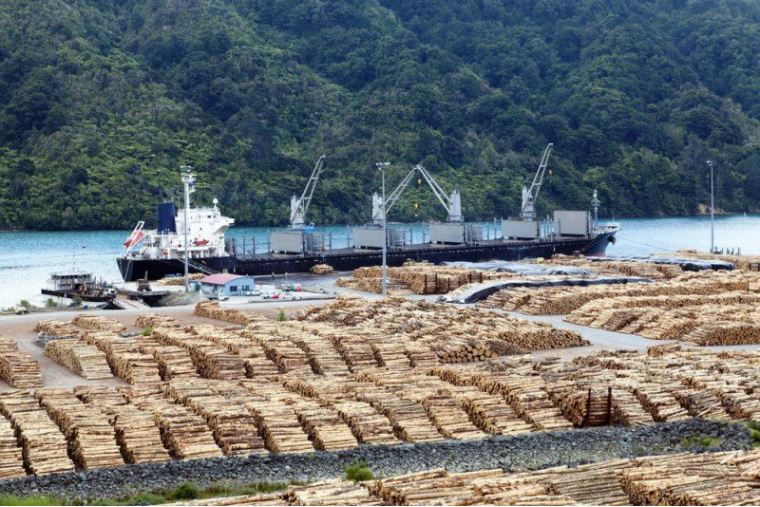
In order to meet the demand for large amounts of timber, India has opened its timber import policy since 1990. The total imports of logs and sawn timber from 2019 to 2020 will reach 6 million cubic meters. India has achieved self-sufficiency in the production of small wood, but due to the shortage of large wood in the forest, it still relies heavily on imported wood. The top four imported timber from India are teak, gulm, merlot and beech. Imported timber mainly comes from Myanmar, Malaysia, Indonesia, Nigeria, Ghana, Togo, Gabon, Brazil, Panama and New Zealand.