

In 2021, South American lumber prices will turn from weak to strong, especially after entering the fourth quarter, the long-term tightness of goods has made the market price rise more obvious. Among them, the cumulative increase in the price of South American timber, represented by the scientific name Tiedou (scientific name Pingcalyx Swo Tiedou), has exceeded market expectations, and the industry seems to have glimpsed a glimmer of light.
The latest news reflects that, as major timber-producing countries such as Suriname and Guyana are currently facing epidemic and shipping pressures, the possibility of South American timber prices continuing to run at a high level cannot be ruled out under the circumstance that the entry of new goods into the market is limited.
At present, the price of South American iron pigeon beans in Guangdong market is reported to be 4100-4200 yuan/cubic meter, a year-on-year increase of 60%; green sandalwood logs (with skin) are 13,000 yuan/ton, a year-on-year increase of 20%; double column hematoxylin logs 2400-2850 yuan /cubic meter, up 20% year-on-year; Watai bean 2400-3200 yuan/cubic meter, up 10% year-on-year; Yibei 2900-4500 yuan/cubic meter, Jatoba (plate) 8000-8500 yuan/cubic meter, year-on-year increase 5% or so.
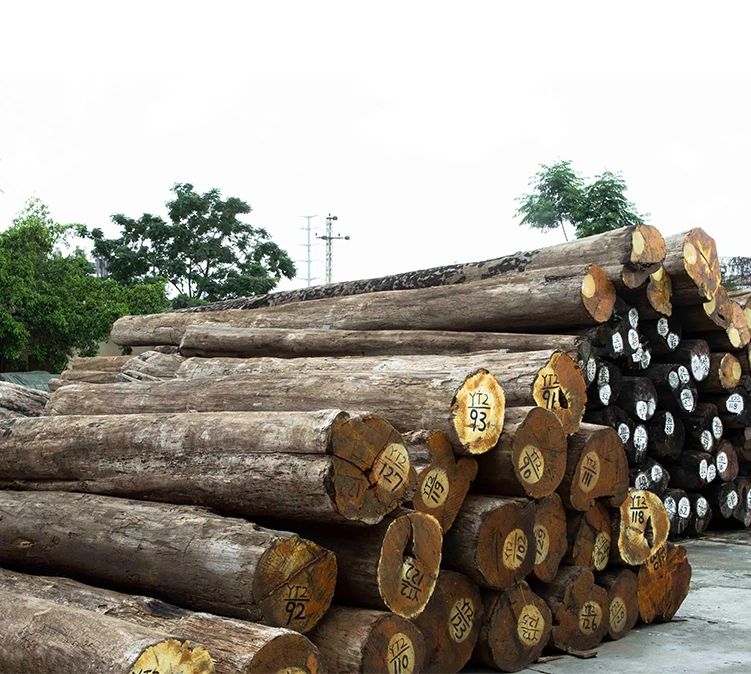
Based on the feedback from all parties in the market, from the demand side, although the current prices of various types of South American lumber are generally at a high level, those who seek goods and ask for prices have become more active. This is mainly because the current downstream manufacturers are in the sprint stage of the best performance at the end of the year, and the demand for wood has increased significantly, which has also formed a certain support for the high price.
On the supply side, after the end of the rainy season (the rainy season has been delayed until August today), new South American timber products have begun to enter the market one after another. Among them, South American iron pigeon beans are the most obvious. It is reported that there will be hundreds of new products after the middle and late October. successively enter the market. However, it should be noted that the unstable new crown pneumonia epidemic and the shortage of containers and warehouses in shipping have largely inhibited the speed of new goods entering the market.
Take Suriname and Guyana timber as examples. It is reported that due to the impact of the epidemic, the operating capacity of the terminals in these two countries is currently very weak, and the cabinets and warehouses are very tight, and timber merchants generally report that they cannot order warehouses. Therefore, in terms of the overall situation of the supply side, the current South American timber is still in a relatively tight state.
In addition, in terms of the profitability of timber merchants, due to the shrinking supply, most timber merchants operating in wet warehouses are faced with the dilemma of poor profit growth. Especially for South American iron pigeon beans, after the market slump in the previous two years, the enthusiasm of most merchants has been affected. Therefore, even if the price increase is significantly higher than expected, there are very few merchants who can profit from it. Watai beans, Shuangzhu hematoxylin, etc. are also facing the same problem. There is a price but no stock. Timber merchants are deeply helpless!
However, when it comes to the next market, most merchants have made a positive outlook. They generally believe that the decline in the number of transactions is caused by the imbalance between supply and demand in the entire industry chain. The lack of stocking of raw materials by downstream manufacturers has brought great pressure to the operation of timber traders, but under the competitive landscape, the instability and uncertainty of the supply side also bring certain opportunities to the market. The probability of business profits will also increase. It's a challenge and an opportunity!