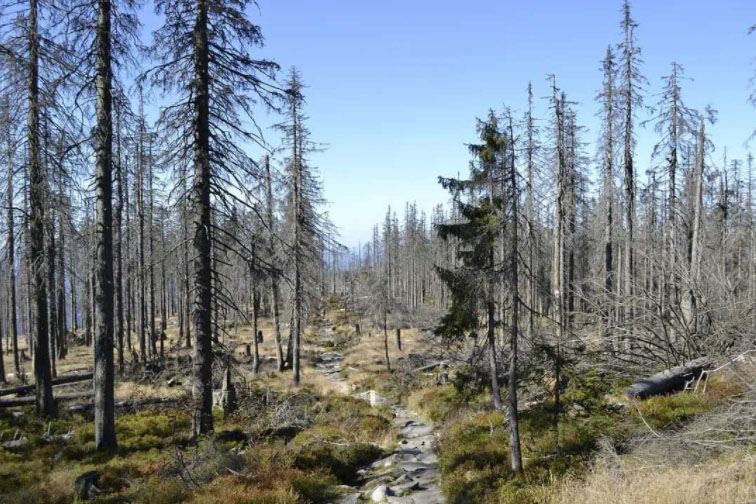
According to the statistics of the Russian forest management agency Rossesinforg, the size of dead trees (including dead trees, stumps, and wood chips, etc.) in the country's forests is as high as 23.8 billion cubic meters, accounting for 21% of the forestry reserves of the entire forest. Storms, deforestation, and forest fires are all causes of deadwood. At the same time, natural plant death due to age or long-term flooding is also one of the causes of tree death.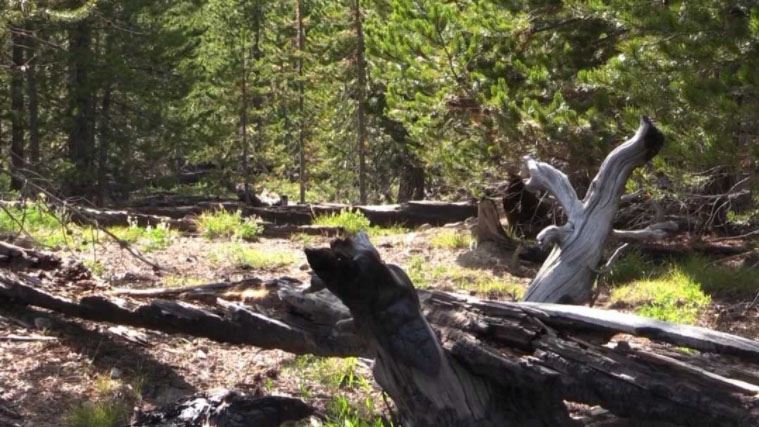
According to calculations by the department, the average carbon storage of dead forests is 6.9 tons per hectare. The role of deadwood in the carbon balance of forest ecosystems is very important. This wood is not only unsuitable for industry, but also gradually releases the carbon accumulated during its growth. Earlier statistics by Rossesinforg showed that Russia’s forests have accumulated about 4.48 billion tons of carbon.
In some cases, the existence of dead trees is reasonable. It helps protect the biodiversity of forest ecosystems. However, the presence of excessive wood chips harms forests. In addition, fallen or overhanging tree trunks can transmit grassroots fire to the tree canopy, which can trigger large-scale forest fires.
This year, experts from Rossesinforg evaluated preventive measures in the forest, one of which is to clean up unnecessary dead trees. The survey was conducted in 24 regions of the country. Most of the dead trees are located in the forests of Krasnoyarsk Krai, Khanty-Mansi Autonomous Region, Novosibirsk, Tomsk, and Irkutsk regions.
The history of Roslesinforg can be traced back to May 23, 1937, when the All-Union Forest Stock Office (Lesproekt) was established. Until 1957, Lesproekt was known to all forest practitioners in the former Soviet Union.
In the late 1970s, with the advent of the first computer, forestry needed to collect, process, and analyze all forest reports for full automation and informatization. In 1980, under the order of the Minister of Forestry of RSFSR A.I. Zverev, the main information and computing center of the RSFSR Ministry of Forestry, was established. In 2001, it was renamed Rossesinforg. Today's Roslesinforg is a vertically integrated structure responsible for managing Russia's forest resources. There is a central office in Moscow and 35 branches throughout Russia.