Sarawak Deputy Prime Minister Datuk Amar Awang Tengah AliHasan said that despite the impact of the epidemic, the performance of Sarawak's timber industry has picked up in terms of export value last year compared to 2020.
The second minister of the Ministry of Natural Resources and Urban Development said this was driven by higher prices for key wood products such as plywood, logs, sawn timber and fibreboard.
The total export value of Sarawak's timber products increased by 4% to RM3.9 billion last year compared to RM3.7 billion in 2020. Plywood contributed RM2.1 billion, or 55% of the total export value last year.
“The main market for Sarawak’s timber products is Japan, which contributed RM2 billion last year, or about 53% of the total export value,” he said.
Awang Tengah said the export value of timber products continued to grow by 26% to RM1.04 billion in the first quarter of this year, compared to RM826 million in the same period last year.
He said Japan remained the leading importer of Sarawak's timber products, accounting for RM616 million or 59% of the total export value in the first quarter of this year.
He added that other key markets were India at RM119 million, the US at RM61 million, the Middle East at RM44 million, Taiwan at RM43 million and the Philippines at RM41 million.
"In terms of product, the export value of plywood increased by 23% to RM603 million in the first quarter of 2022, compared to RM488 million in the first quarter of 2021."
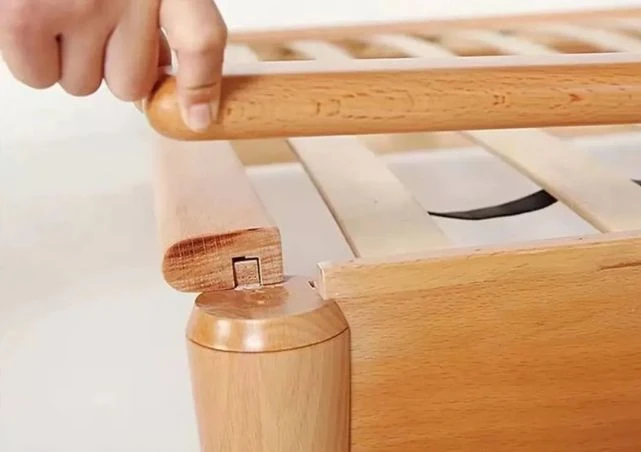
Awang Tengah said the government is committed to increasing the value of exports by encouraging the production of more high value-added products such as furniture and wood engineering products, as well as strengthening research and development (R&D) efforts.
"It is hoped that this rate of growth can be maintained until the end of 2022 and beyond to ensure that the timber industry continues to contribute to Sarawak's socio-economic development," he added.
He said the Sarawak government, in its Post-COVID-19 Development Strategy (PCDS) 2030 plan, has committed to increase the export revenue of timber products to RM8 billion per annum by 2030.
To this end, he said, the focus is on producing high value-added products such as furniture, engineered wood and glulam products, and bamboo products, and increasing research and development efforts.
This target is in line with the expected growth potential of the world furniture market value, he said.
“According to the U.S. 2022 report released by Research and Markets, the world furniture market will be worth $945 billion per year by 2030, up from just $637 billion per year in 2021.
“According to a 2022 report by Allied Market Research, the market value of engineered wood products is expected to increase to more than $400 million per year by 2030, up from just $284 million per year in 2019.
“According to the U.S. 2022 report published by Future MarketInsights Globaland Consulting, the bamboo products market is valued at $6.9 billion per year in 2022 and is expected to increase to $12.4 billion per year by 2032,” he noted.
Therefore, he said, local industry players should take the opportunity to increase the production capacity of high value-added products such as furniture products, woodworking products and bamboo products.
He said the industry also needs to change and improve existing technologies, namely to adapt to Industrial Revolution (IR) 4.0 and digital technologies.
Using the technology could also reduce reliance on recruiting foreign labor, which has also led to high production costs and reduced competitiveness, he argues.
"The government, through relevant agencies, will continue to assist the industry in providing the necessary infrastructure such as furniture testing laboratories, industrial sites such as Demak Laut and the Furniture Park in Tanjung Mani, as well as collaborating with local higher education institutions in research and product development," he added.