

Kyle Little, chief operating officer of SherwoodLumber, said that from 2020 to 2021, the demand of ordinary consumers has led to large fluctuations in the price of the product. "Since the white-collar workers have switched to working from home during most of the epidemic, they have almost nothing to do except to complete the previously idle home improvement projects."
However, Little said: "We will not see so many ordinary consumer demands for a while. The market is returning from the extreme state of over-expansion and is developing its new normal. This new normal has not yet been fully determined. , But its scope looks better than the state before the new crown epidemic."
Scott Reaves, business director of Domain TimberAdvisors, said: "The housing market will definitely have ups and downs in the next few years. It is expected that during this time, the demand for timber for housing will continue to increase."
He said that for now, the real opportunity for investors is in the upper reaches of the supply chain of forest land investment. Increasing demand for raw materials (including wood, packaging materials, and large amounts of wood), coupled with growing interest in reducing carbon emissions, shows that "investment in forest land is an attractive entry point." For example, earlier this year, the forest products company Huihao (WY.US) reached an agreement with a subsidiary of the manufacturing company Greif (GEF.US) to purchase 69,200 acres (approximately 415,000 acres) from the latter. ) Alabama woodland.
Reaves said that even if there is no epidemic, the demand for housing construction in the next 8 to 10 years will be very high. Due to the economic recession in 2007-2009, the housing demand in the United States from 2008 to 2018 was insufficient.
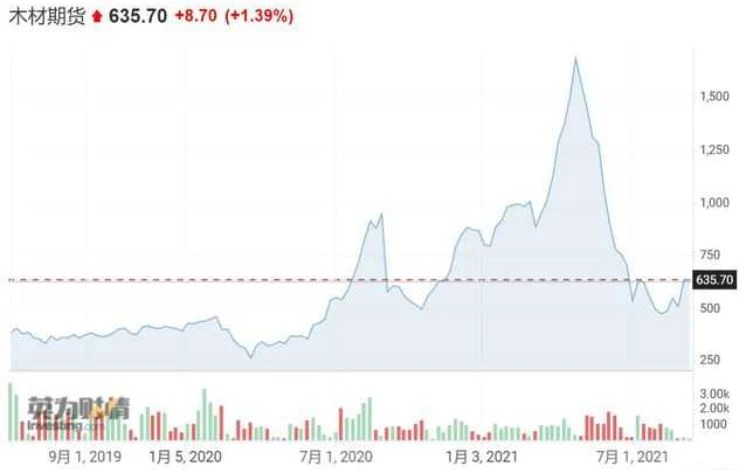
According to data from the U.S. Census Bureau, in August, American homebuilders began building houses at a seasonally adjusted annual rate of 1.62 million, an increase of 3.9% from the rate raised in July. James Knightley, the chief international economist of ING International Group, believes that lower commodity prices are alleviating some of the cost pressures on builders, and housing construction activities are returning to the trend before the new crown epidemic.
Looking to the future, Steve Loebner, director of risk management at Sherwood Lumber, believes that there are investment opportunities in physical spot wood. Loebner said that timber futures are already far ahead of the spot market and will be at a premium over the spot market for delivery next year, so he is bullish on the spot market. Coupled with strong demand and the positioning of customers in the spot and derivatives markets to avoid the risk of explosive price fluctuations, it indicates that the risk/return of the spot market must be biased towards the upside for a period of time.