


Kumiko (Japanese: 組子) is a Japanese technique of assembling wooden pieces without the use of nails.
Method
Thinly-slit wooden pieces are grooved, punched, and mortised, and then fitted individually using a plane, saw, chisel, and other tools to make fine-adjustments. The technique was developed in Japan in the Asuka Era (600-700 AD). Kumiko panels slot together and remain in place through pressure alone, and that pressure is achieved through meticulously calculating, cutting, and arranging interweaving joints. The end-result is a complex pattern that is used primarily in the creation of shoji doors and screens.Traditionally, the wood of choice was the hinoki cypress
Patterns
The designs for kumiko-pieces aren't chosen randomly. Many of the nearly 200 patterns used today have been around since the Edo era (1603-1868). Each design has a meaning or is mimicking a pattern in nature that is thought to be a good omen. The patterns are designed to look good, but also to distribute light and wind in a calming and beautiful way.
Traditionally it is made with hand-tools only, but in the western society they have made new techniques to make these kinds of patterns, it involves a table saw, a sharp chisel, and some guides made by yourself, some can be made with plywood and some need to be made with hard or soft wood.
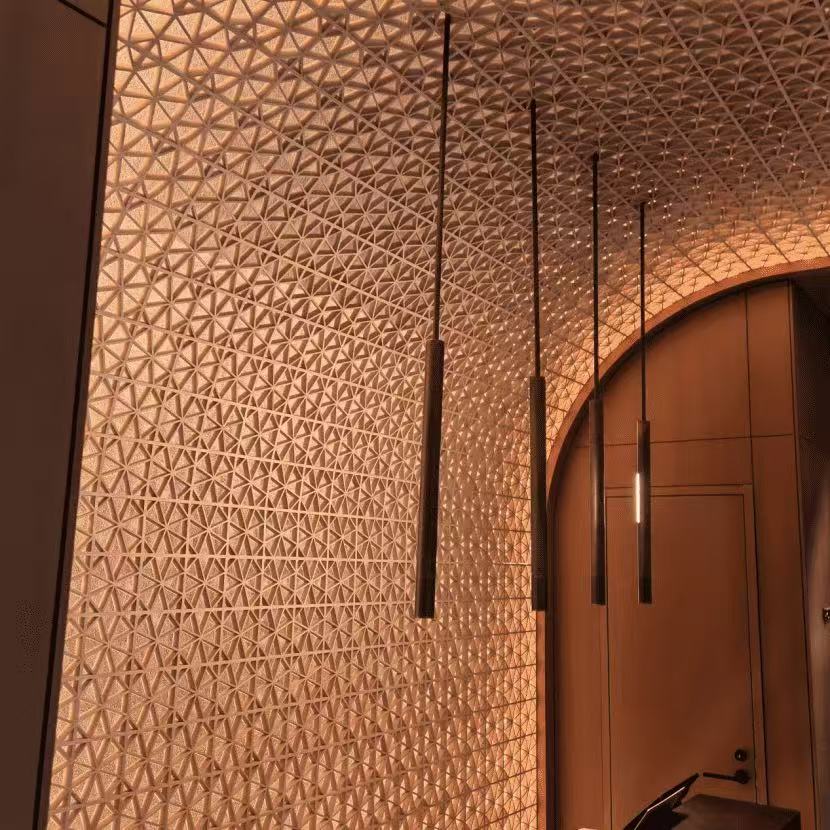
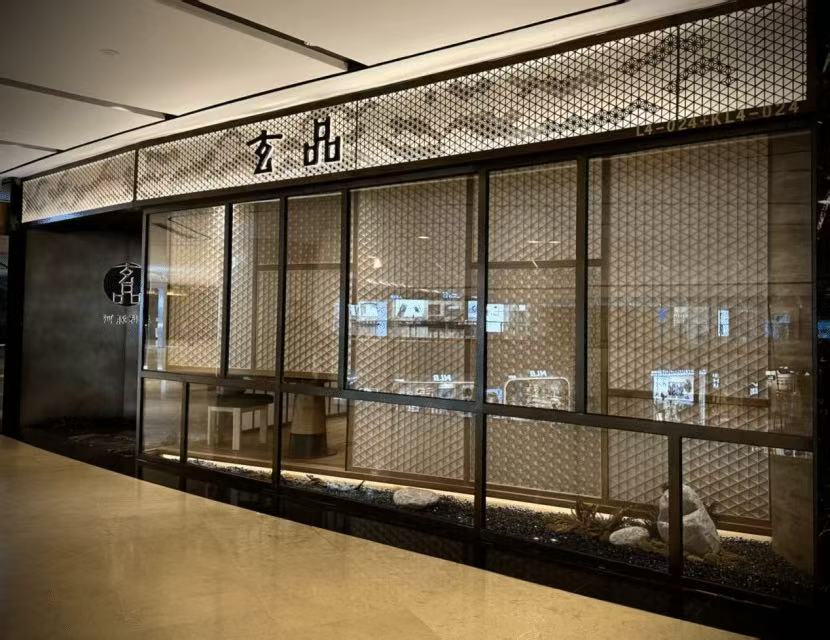
MUMU Kumiko
Dongguan Mumu Woodwork Co., Ltd. specializes in the production of "Kumiko" lattice work. We primarily utilize Hinoki cypress, basswood, walnut, and cherry wood, and offer full customization for any size or pattern. In terms of application, our products are predominantly featured in Japanese-style restaurants; indeed, we have successfully exported our *Kumiko* creations to clients across the globe. If you have any requirements for custom *Kumiko* designs, please do not hesitate to contact us. Below, you will find visual examples of projects completed for our clients.