

African neem, also known as Sapele or phantom wood, is a kind of large tree distributed in tropical Africa. longitudinal shallow grooves. This kind of wood is mainly used for slicing micro-veneer, rotary-cut veneer, high-grade furniture, flooring, etc. The wood made of neem has a luster, the freshly cut surface has a turpentine fragrance, the grain is staggered, and the structure is fine and uniform.
Morphological characteristics
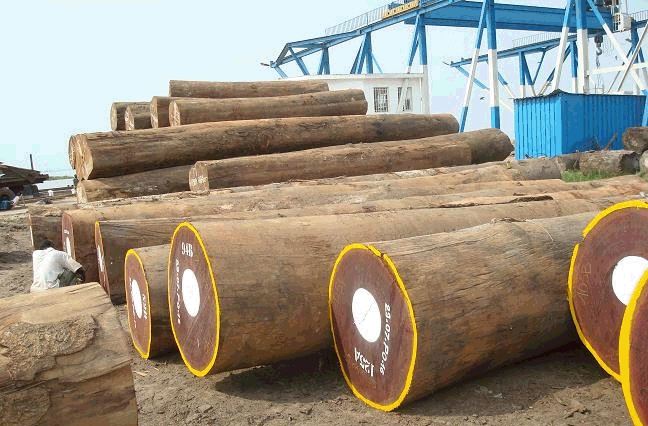
Neem is hard in texture, about 1.0 CM thick, and has a large number, with an average height of 40 M and a DBH of more than 1.0 M. There are often sparse longitudinal shallow grooves on the wood surface. It is easy to peel off in strips, the outer skin is relatively thin and brittle, the color is light reddish-brown, and some are slightly off-white, the outer skin is easy to fall off in small pieces, and irregular shallow pits remain; The part close to the outer skin is lignified, and the part close to the surface of the wood is lamellar, and it is easy to separate in flakes, and the stone cells are abundant.
Neem heartwood and sapwood are obviously different. The cross-section section is basically reddish-brown. After a long time of storage, it is easily oxidized to iron brown. The sapwood is light yellow-white and the annual rings are not clear. Neem is a diffuse-porous wood, and the tube holes can be seen with a magnifying glass. The size is moderate, the black gum is relatively rich, the axial parenchyma is obvious in the magnifying environment of the magnifying glass, and the wood ray density is very narrow.
distribution area
Mainly distributed in tropical Africa.
main value
African neem is mainly used for slicing micro-veneer, rotary cutting veneer, high-grade furniture, flooring, etc. The wood made of African neem has a luster, the new cut surface has a pine resin fragrance, the texture is staggered, the structure is fine and uniform, the weight and strength are media, and the drying shrinkage is large. This kind of wood is relatively easy to process, and the surface is prone to tearing. It is also easier to deform and warp.