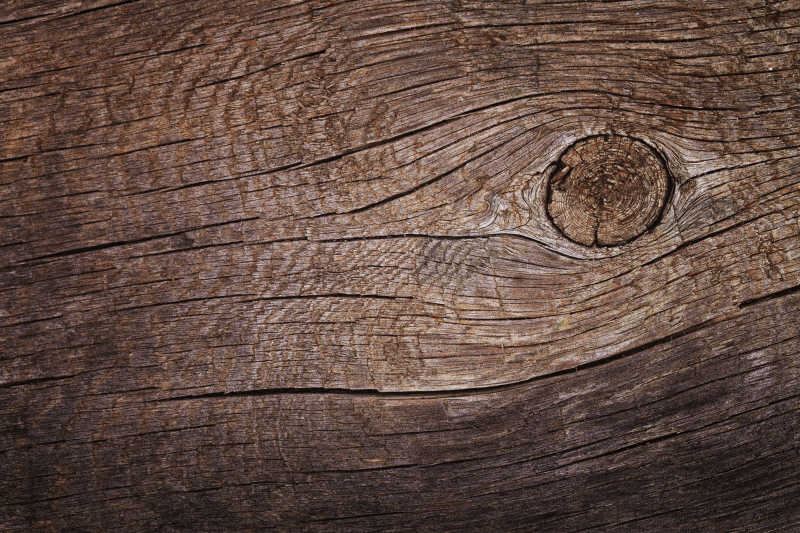
Wood is a natural substance. Trees are often affected by various external factors during the growth process, resulting in abnormal wood structure. There will be defects that are unfavorable to the painting. The material changes caused by diseases and insects (called parasitism) Sexual defects), these are all natural defects of wood.
Common natural wood defects include knots, discoloration, worm eyes, cracks, etc. These will bring harm to painting, so they must be removed and remedied before painting.
Crack is a phenomenon in which the fibers are separated from each other due to the influence of external force, temperature, and humidity changes on the wood.
Wood cracks have the following forms: surface cracks, internal cracks, end cracks and round cracks. Below we briefly understand the causes of these types of cracking:
1. Surface cracking:
refers to surface cracks, and surface cracks refer to cracks on the surface of the original wood body or finished timber. Cracks are usually confined to the chord surface and develop along the radial direction. When the wood dries, moisture is first evaporated from the surface. When the moisture content of the surface layer drops below the fiber saturation point, the surface wood begins to shrink, but the moisture content of the adjacent inner wood is still above the fiber saturation point and does not shrink. The shrinkage of the surface wood is limited by the inner wood and cannot shrink freely, so internal stress is generated in the wood: the surface wood is stretched, and the inner wood is compressed. The more severe the drying conditions, the greater the difference between the moisture content of the inner and outer layers of wood, and the greater the internal stress produced. If the tensile stress of the surface layer exceeds the tensile strength of the horizontal grain of the wood, the wood structure will be torn. Since the tensile strength of the tissue along the wood ray is lower than the strength of the adjacent wood fibers, the cracks first occur along the wood ray.
2. Internal fissure:
is the internal crack. Internal cracks are also often called honeycomb cracks. Internal cracks occur in the late drying period, sometimes in the storage period of dry materials. It is usually not easy to find from the outside of the wood, but when it is serious, it can be judged by the depression of the wood surface. Internal cracks are caused by the tensile stress of the inner layer of the wood.
Three, end crack:
is the end face crack. End cracks are either limited to the end face of the wood, or extend to one or both sides of the end. The latter is usually called splitting. The main reason is that the water conductivity of the wood along the grain direction is much greater than that of the horizontal grain direction. When the wood is dry, the water evaporates from the end surface much faster than from the side surface. The moisture content of the end is lower than the middle, and the shrinkage of the end is limited by the middle wood, so tensile (extension) stress is generated at the end. When the tensile stress exceeds the transverse tensile strength of the wood, the end cracks.
Four, cracked wheel:
This kind of crack develops along the direction of the growth ring and often extends to several adjacent growth rings. Wheel cracks usually occur in the early stage of drying, appear on the end of the wood, and the cracks deepen and lengthen as the drying progresses. Sometimes it occurs internally, but it occurs in the later stage of drying and is caused by severe internal tensile stress.
Measures to deal with wood cracking
1. Use high temperature qualitative treatment:
The method of reducing internal cracks in wood can be qualitatively treated at high temperature, and the residual deformation of the wood surface that produces internal cracks can be eliminated by high-temperature and high-humidity treatment before the end of the drying process. During processing, the surface layer of the wood produces compressive residual deformation due to humidification and expansion, which offsets the original tensile residual deformation, and the internal cracks of the wood are therefore eliminated.
2. Mechanical crack prevention:
Use iron wire to tie the ends of the dried wood, use anti-cracking rings, combined nail boards, etc., to force the wood not to expand or shrink by mechanical methods, which can also prevent the wood from cracking.
3, apply waterproof coating:
Apply waterproof coating on the end and surface of the wood to slow down the evaporation strength of the wood surface, which can reduce the moisture content gradient inside and outside the wood, and also reduce the cracking of the wood.
4. Immersion treatment with waterproofing agent:
A more effective method is to use a waterproofing agent for pressure treatment, so that the waterproofing agent can penetrate deeply into the wood to achieve a long-lasting and good anti-cracking effect.
5. Improve the method of sawing when making lumber:
Wood is anisotropic. Under the same temperature and humidity changes, the wet expansion and shrinkage coefficients are the chord direction, followed by the radial direction, and the longitudinal change is the smallest. Therefore, when sawing, produce more radial cut boards. , Can reduce cracking. In particular, the sheet with the pulp core is prone to severe splitting when it is dry. This is caused by the difference in the radial and chordal shrinkage near the pulp core. The best way is to avoid the production of the sheet with the pulp core when making the material.