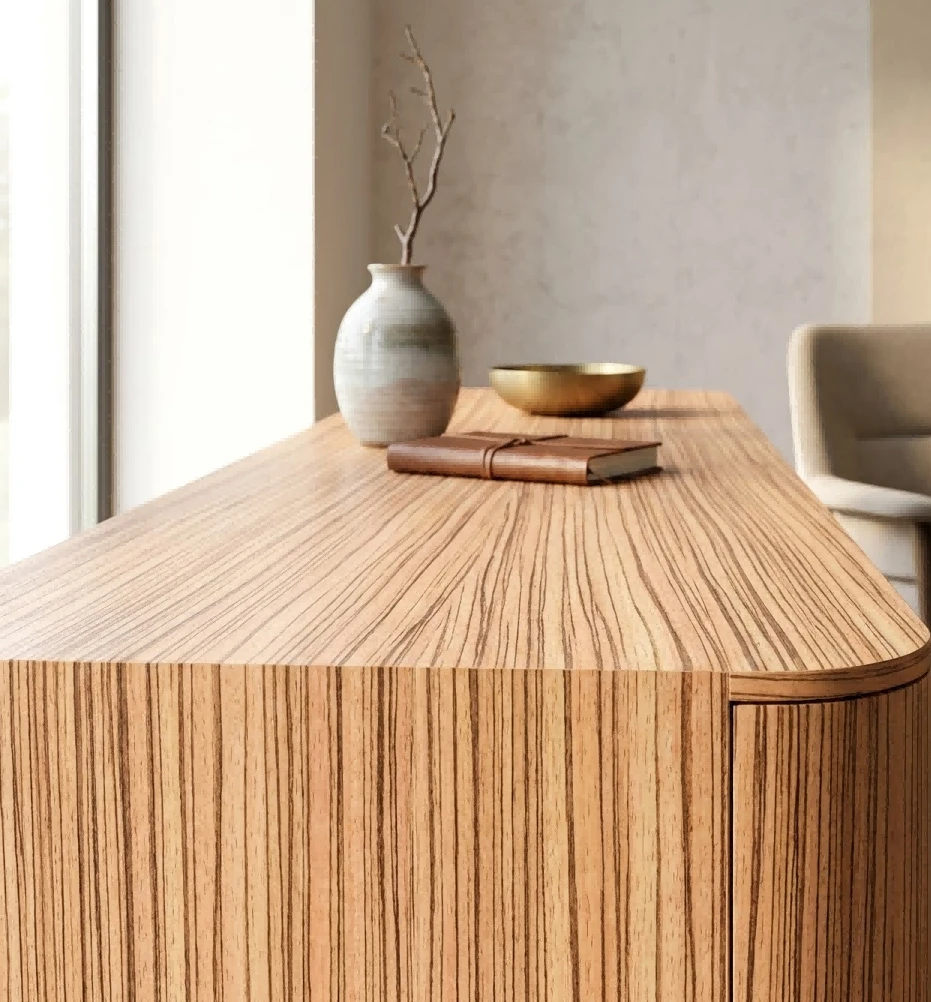
6. Guyi Sumu
Commonly known as Brazilian pear (Bahua)
Guyi Sumu is a kind of precious wood that is widely used in the market. It is said to be expensive because it is dubbed "rosewood", but don't really think it is a kind of rosewood. In fact, it is the same as real rosewood. The rosewood is far away by thousands of miles. And even the place of origin has been tampered with at will.
Bahua does not belong to mahogany, but its performance and texture are still very good, and the price is relatively expensive among woods. The heartwood of Brazilian pear is reddish brown, often with dark stripes, the wood is shiny, and has no special smell; it is hard and heavy, with high strength. The stripes and interlaced textures of the wood itself form a special beautiful pattern, so it has high decorative value.
7. African Rosewood
Commonly known as African safflower pear, Indian safflower pear, etc.
It is another kind of wood commonly known as rosewood in the market, but the name of this rosewood is not too far away. African red sandalwood and real rosewood are woods of the same family, genus and different species, which are equivalent to brothers.
Only because the air-dry density does not meet the standard of rosewood, it is defined as sub-rosewood. The heartwood of this wood is orange red, brick red or purple red, often with dark stripes, and scratches are visible; the water leaching solution of wood shavings or sawdust Fluorescent, strong aroma. African red sandalwood has fine structure, staggered texture, small dry shrinkage, medium weight, and basic density of 0.55-0.67g/cm3.
Suitable for high-grade furniture and joinery products, musical instruments, carving products, etc.
8. Angora Rosewood
Commonly known as Khmer Pear
This is also a kind of rosewood wood, its sapwood is light gray or yellow, and the heartwood color varies greatly, from brown to purple brown, sometimes with dark stripes, the wood is shiny and has a faint aroma; the texture is until slightly staggered; the structure is fine Uniform; stem shrinkage; wood weight is medium, wood strength is average.
Used for high-grade furniture and joinery products, decorative materials, high-grade floors, musical instruments, carved products, etc.
9. Windmill wood
Commonly known as black rosewood, skin gray
In the mahogany furniture market, in addition to Bahua and Yahuali, there is another kind of wood that is often used to impersonate.
Pinwheel wood belongs to the Gentile family and the genus Pinwheel rattan, mainly produced in Mozambique. The color of the new cut surface of the pinwheel wood is grayish yellow, and the color of the old wood is close to grayish black. The pores are thick and there are obvious hairy grains. Stripes are rare, and the wood grain color is alternately black and yellow.
The wood is hard and brittle, with low oil content, and it is easy to crack in dry climates. The price of this kind of wood is relatively low. Due to its low price, it is currently used by most unscrupulous merchants in the market to pretend to be authentic Indonesian ebony (striped ebony).
10. Small shoe dal
Commonly known as zebra wood, ebony wood
This wood is also found in veneers and solid wood furniture. Small shoe pigeonpea is commonly known as zebra wood or ebony wood in the market. This kind of wood is considered as a relatively expensive furniture material, and the price is not low.
The wood of ebony wood is light peach brown, light yellowish brown. With narrow intervals and regular dark brown stripes. The wood has good workability, but the wood is easy to decay after a long time, and the color of the wood will fade.
It can be used to slice veneer, furniture boards, solid wood flooring.
Now that we have covered the basic characteristics of the tree species, let's look at the common application scenarios for each one.
6. Guyi Sumu
Live-Edge Slabs: Thanks to the massive dimensions of its raw logs, Guyi Sumu is currently a leading timber species on the market for crafting seamless, large-scale luxury tables, executive desks, and high-end hotel lobby reception counters.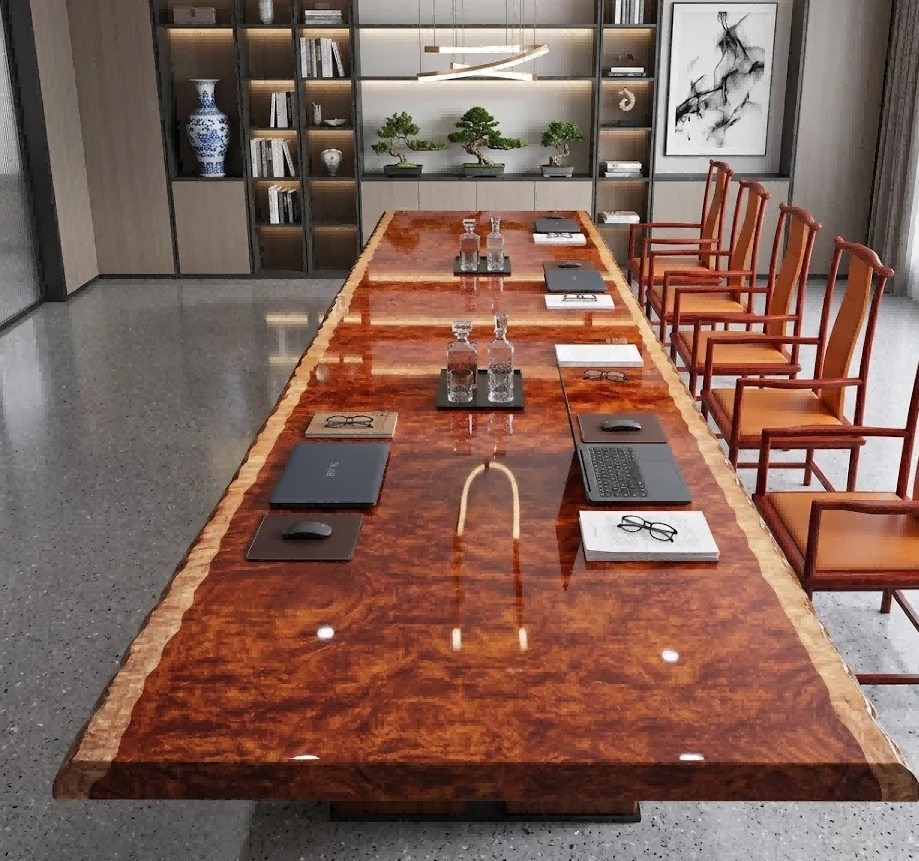
7. African Rosewood
It is commonly used to make Chinese-style furniture.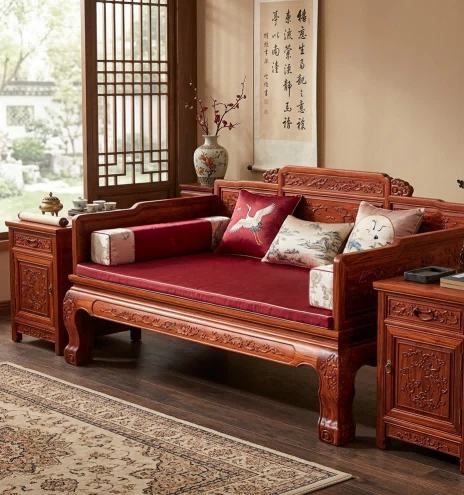
8. Angora Rosewood
Due to the stability of its material properties, it is commonly used in the construction of solid wood cabinets.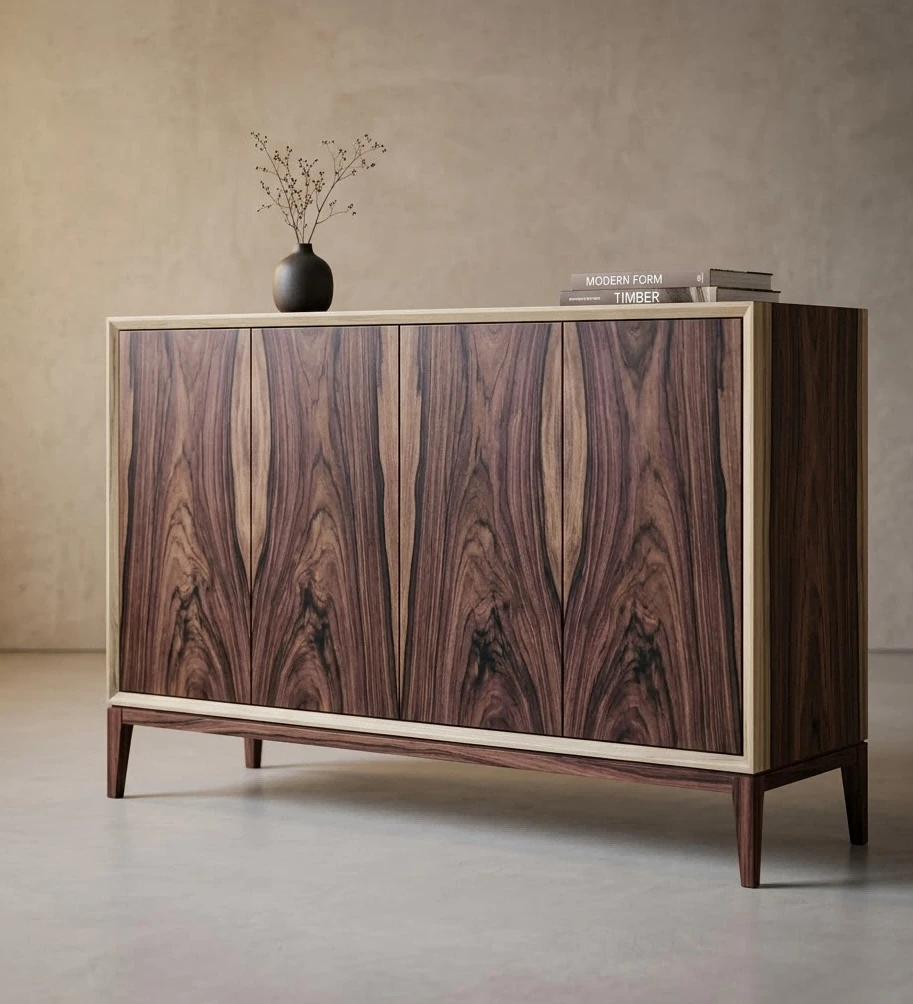
9. Windmill wood
In standard applications, due to its high density and hardness, it is frequently used to manufacture ordinary solid-wood office furniture.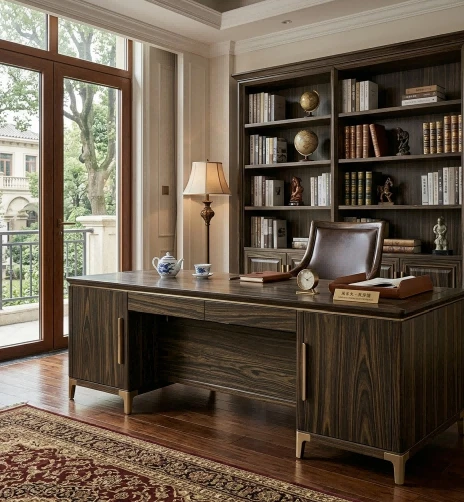
10. Small shoe dal
Due to its decorative grain, it is often used as a veneer for high-end furniture.