

Okoume Wood (English name: Okoume) is known as the "King of African Trees". Distributed in Central Africa and West Africa. This species is mainly imported from Cameroon, Gabon, Equatorial Guinea, and Malaysia. Mainly used as materials for musical instruments and high-end furniture. After the Allied forces occupied North Africa during World War II, the wood was used extensively to make butts. It is said that on June 6, 1944, the Allied forces also used a large amount of the wood for the defense of ships when they landed in "Normandy".
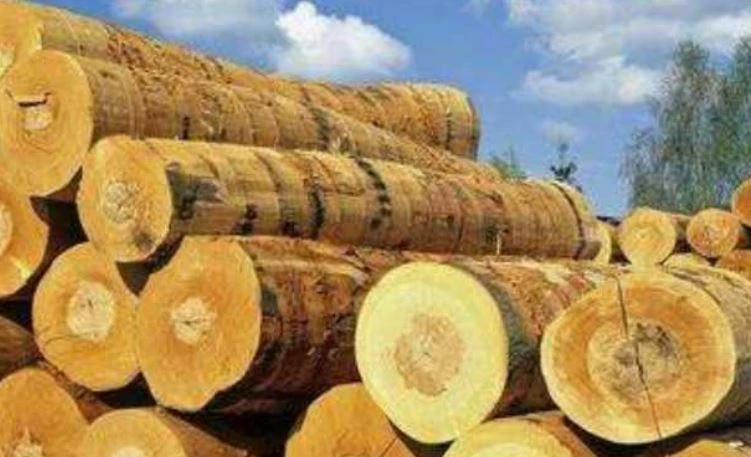
Basic Information
Chinese name: Okoume or Okelan Okoume Okoume
English name: Okoume
Latin name: Aucoumea klaineana
Scientific name: BURSERACEAE AUCOUMEA KLAINEANA
Irregular names: Mahogany, African mahogany, Red walnut, Gabonese olive. Local names: Okoume (France), Combo combo, Angouma, Moukoumi, N'koumi (Gabon), N'kumi (Congo), Okaka, azouga, Gaboon (UK), Mofoumou, Okume, N'goumi (Equatorial Guinea), Cambogala, Ozonga (West Africa) Family name: Burseraceae (burseraceae) Genus name: qucoumea Air dry density: 0.48g/cm3
Trees and distribution
A large arbor, 25~35m high, 1.0~2.5m in diameter, with large buttress roots, is known as the "King of African Trees".
There are only one species in this genus. Distributed in Central Africa and West Africa. Mainly imported from Gabon, Cameroon, and Equatorial Guinea, it is the largest and most important West African plywood material.
Structural features
Bark, 0.5~0.8cm thick, hard in nature, easy to peel off in lumps. The outer skin is gray-brown; it is easy to fall off in small pieces and leave shallow pits; it is dense with fine dots. The inner skin is dark reddish-brown; the fiber is developed and easy to enter the party long. When the fresh bark is just peeled off, the surface and the bottom of the bark are all red and yellow. Cross-section: The difference between heart and sapwood is slightly obvious. The heartwood is orange-red to light reddish-brown. The sapwood is gray and narrow. The growth ring is not obvious. Macrostructure: diffuse-porous material. The tube holes are visible to the naked eye, slightly less, and medium in size; the main ones are single tube holes, with very few diameter rows of multiple tube holes (2~3). The axial parenchyma is almost invisible under the magnifying glass. It is obvious under the magnifying glass of wood ray, thin to medium and narrow.
Wood properties
Strong luster. The texture is straight; the structure is fine and uniform; the weight is light; the hardness is soft; the strength is low; It is easy to process, contains silica, and the tool is easy to be blunt; sometimes it has ripples and luster, and is odorless. Fine wood, small color difference, no knots, good veneer cutting, and peeling performance; slightly fluffing on the surface; good adhesive performance; easy nailing. Slightly resistant to corrosion. It dries quickly and has no defects. The air-dry density is 0.48g/cm3.
Wood use
Suitable for peeling veneer, plywood, blockboard, furniture, wooden molds, packaging boxes, light components, musical instruments, etc. It is the most important material for plywood peeling. Commonly used for the surface material of composite materials, Okoume wood plus belongs to the African hard mixed wood. Belongs to the low-end varieties of the market.