Artificial boards are materials made from wood or other plant fibers as the main raw materials, which are reassembled into board form through mechanical processing and chemical treatment. It is an important basic material in modern furniture, construction, and decoration industries, offering advantages such as high resource utilization, adjustable performance, and ease of processing. With the increasing demand for natural wood and the continuous strengthening of environmental protection concepts, artificial boards are becoming more and more popular as a high-cost-performance alternative to solid wood boards.
So, what exactly are artificial boards? As an experienced wooden furniture manufacturer, I will provide a comprehensive explanation in this article.
What are Artificial Boards?
Artificial boards are materials made by processing natural wood or plant fibers through specific mechanical treatments and chemical processes, then reassembling them into board form. The production process typically includes several steps such as crushing, drying, gluing, laying, and hot pressing. These steps reassemble the originally dispersed wood fibers, making the structure of artificial boards more uniform, with better physical and mechanical properties and stability.

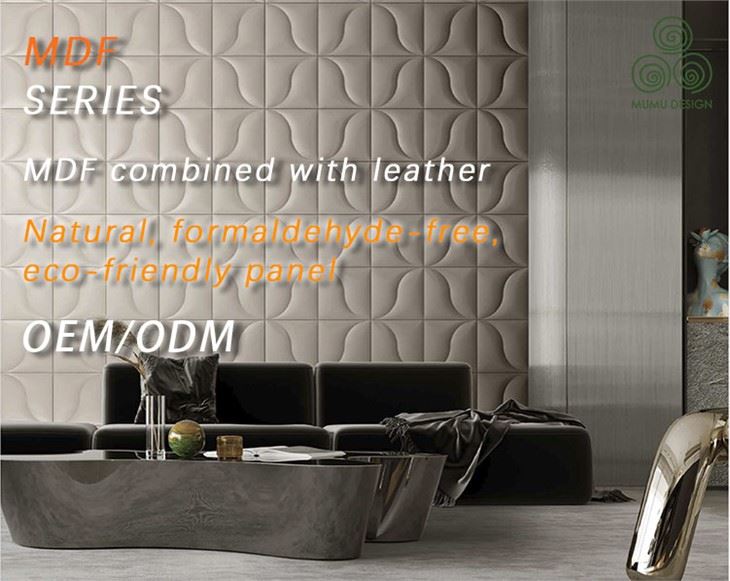
Image title:MDF Leather Wood Wall Panel
Common types of artificial boards include plywood, particleboard, fiberboard, and oriented strand board (OSB). Each type of board has slightly different manufacturing processes and application scenarios, but all offer advantages such as efficient resource utilization, ease of processing, and adjustable performance. Artificial boards not only maximize the utilization of wood resources and reduce waste but also allow the adjustment of the board's properties to meet different demands and application scenarios.
What are the Types of Artificial Boards?
Artificial boards can be divided into several main types based on their raw materials and production processes, each with different characteristics and application areas. Here are the common types of artificial boards and their features:

Plywood (Multilayer Board)
- Raw material: Rotary-cut veneers (thin wood slices).
- Process: The veneers are stacked in alternating directions perpendicular to the wood grain and bonded with adhesive.
- Features: Plywood has high strength and stability, especially in load-bearing structures. It is commonly used in large furniture, transportation packaging boxes, and construction decoration. Plywood is usually made in odd layers such as three, five, or seven layers, with each layer's wood grain direction alternating to enhance the board's resistance to bending and deformation.
- Applications: Furniture manufacturing (e.g., cabinets, bookshelves), packaging boxes, carriages, etc.
Particleboard (Chipboard)
- Raw material: Wood scraps (such as wood shavings, sawdust).
- Process: The scraps are mixed with adhesive and pressed into a board through heat pressing.
- Features: Particleboard is popular for its low cost and good sound-absorbing properties, but it has poor moisture resistance and can easily swell when exposed to water. It is commonly used for the backs and bottoms of furniture. The surface of particleboard is smooth and can be improved by veneer applications, making it adaptable to various design styles.
- Applications: Custom furniture, office furniture, decoration.
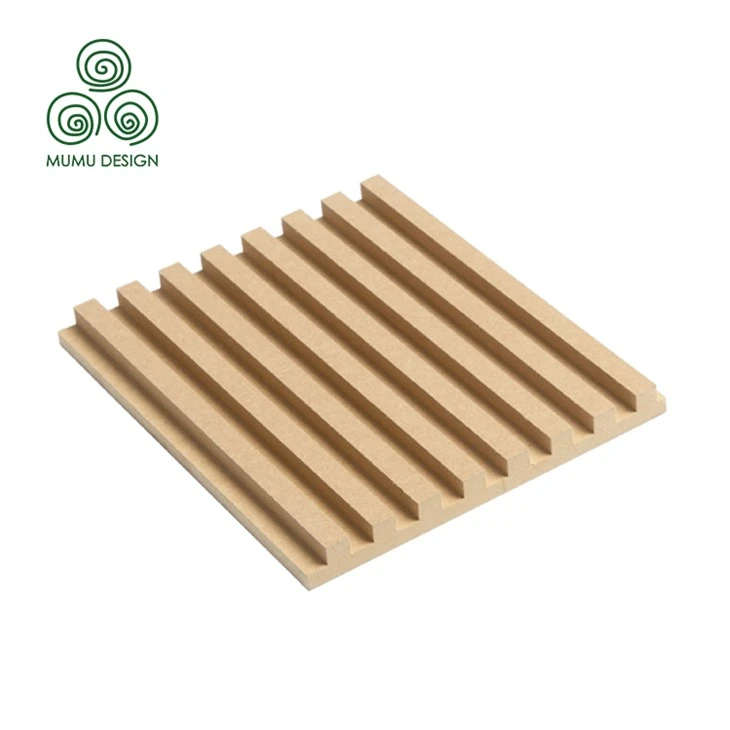
Fiberboard (MDF)
- Raw material: Wood fibers or other plant fibers.
- Process: The wood fibers are bonded with adhesive and formed through drying and heat pressing.
- Features: Based on density, fiberboard can be divided into low-density, medium-density, and high-density types.
- Low-Density Fiberboard (LDF): Low density, good sound absorption, suitable for interior decoration or wall panels.
- Medium-Density Fiberboard (MDF): Moderate density, smooth surface, easy to process, commonly used for furniture, door panels, and wall decorations.
- High-Density Fiberboard (HDF): High density, high strength, suitable for flooring substrates and speaker panels in high-strength applications.
- Applications: Furniture manufacturing, door panels, flooring, wall decorations, packaging.
Oriented Strand Board (OSB)
- Raw material: Large wood chips (long strips of wood).
- Process: The wood chips are arranged in a specific direction and then heat-pressed.
- Features: OSB has high structural strength and good bending resistance, making it particularly suitable for use in construction materials. Its surface is not as smooth as other boards but can be significantly enhanced in appearance with surface coating treatments.
- Applications: Building structures, wall and floor substrates, packaging materials, etc.
Blockboard (Core Board)
- Raw material: Thin wood veneer on both sides, with wooden strips used as the core.
- Features: Blockboard has strong nail-holding ability and resistance to deformation, making it especially suitable for furniture that requires high stability and resistance to deformation. Due to its strong physical properties, blockboard is widely used in high-end furniture manufacturing.
- Applications: Furniture manufacturing, partitions, door panels, etc.
Characteristics of Artificial Boards
Artificial boards have many excellent properties, and their specific characteristics are as follows:
Efficient Resource Utilization
One of the greatest advantages of artificial boards is their ability to effectively utilize low-value raw materials such as wood scraps, fast-growing timber, bamboo, and straw. This process turns discarded materials into useful boards, greatly improving resource utilization efficiency.
Controllable Performance
By adjusting the raw material ratio, type of adhesive, and hot pressing parameters in the production process, the performance of artificial boards can be precisely controlled. For example, functional materials such as moisture resistance, fire resistance, and antibacterial properties can be added to enhance the board's characteristics to meet different application needs.
Convenient Processing
Artificial boards are produced to standard sizes, making them easy to cut, drill, and process, which is ideal for large-scale industrial production. Different types of artificial boards can be processed and customized according to actual needs, greatly improving production efficiency.
Low Cost
Compared to natural wood, artificial boards are relatively low in cost and can simulate the appearance of solid wood textures through surface treatment technologies, offering a higher cost-performance ratio. For mass production, especially in custom furniture, using artificial boards can significantly reduce production costs.
Strong Stability
Due to their multi-layered structure or composite processing of particles and fibers, artificial boards are more stable and resistant to deformation than natural wood. They are less affected by environmental factors such as humidity and temperature changes, making them particularly suitable for high-humidity or fluctuating environments.
Environmentally Friendly
Modern manufacturing technologies for artificial boards are gradually reducing their environmental impact. By using low-formaldehyde adhesives and eco-friendly materials, many manufacturers have started producing formaldehyde-free or low-formaldehyde artificial boards to meet environmental protection requirements.
Artificial Boards VS. Solid Wood Boards
|
Comparison Dimension |
Artificial Boards |
Solid Wood Boards |
|
Cost |
Relatively lower, as it can utilize by-products and fast-growing materials, with low production costs, suitable for mass production |
Higher cost due to the use of natural wood, production is more complex, and prices are higher |
|
Structural Stability |
Stable structure, not easily deformed, especially suitable for environments with varying humidity and temperature |
Natural wood, easily affected by humidity and temperature, may swell, shrink, or crack |
|
Environmental Friendliness |
Depends on the adhesives and production technology; low-quality artificial boards may release harmful substances (such as formaldehyde) |
Natural wood quality, generally free of harmful chemicals, but its harvesting may lead to depletion of forest resources |
|
Durability |
Some low-quality artificial boards may have poor durability, and the surface is easy to scratch, making it difficult to repair |
Solid wood is durable, but the surface can be scratched or damaged, which can be repaired by sanding |
|
Processability |
Easy to process, standardized sizes, easy to cut, drill, etc., suitable for industrial production |
Processing is more complicated, requires higher precision, and needs more advanced equipment |
|
Aesthetic Appearance |
Can be processed with surface treatments (such as coatings, painting), providing more design flexibility |
Natural texture with unique wood grain, often more desirable for its natural and timeless beauty |
|
Weight |
Lighter, more convenient for transportation and handling |
Heavier, requiring more effort to transport and move |
|
Maintenance & Care |
Difficult to repair if damaged, with lower durability |
Requires regular maintenance, can be repaired if damaged, ensuring long-term durability |
The Manufacturing Process of Artificial Boards
The production of artificial boards is a complex process that involves multiple stages, with each step of the process directly affecting the final product's quality. Below are the common manufacturing processes for artificial boards:
Cutting Process
The first step in the production of artificial boards is the treatment of raw materials, which includes rotary cutting, planing, slicing wood chips, and grinding fibers. Through precise cutting, the wood is transformed into different shapes (such as thin sheets, particles, fibers, etc.) for further reassembly into board form.
Drying Process
The drying process of the raw materials for artificial boards is crucial. Wood chips, fibers, or sawdust must reach a specific moisture content to ensure that excessive moisture does not evaporate during the gluing process. The drying process must be strictly controlled, typically requiring the wood moisture content to be kept below 16% to ensure smooth processing in subsequent stages.
Gluing Process
After drying, adhesive is evenly applied to the wood units, which is key to ensuring strong bonding of the boards. The type, amount, and uniformity of the adhesive used will affect the board's strength and service life. High-quality adhesives can enhance the board's resistance to deformation and improve its environmental friendliness.
Forming and Pressing
The glued materials are then formed and pressed through hot or cold pressing to solidify their shape. Hot pressing is the most common method, where high temperature and pressure are applied to cure the adhesive, forming a stable board structure. The control of temperature, pressure, and time during this process is critical.
Final Processing
After forming, the boards undergo trimming, sanding, and repair to ensure they meet specifications and are ready for painting or further decoration. The final products are then processed into various shapes and sizes based on market demand.
Specialized processes for different types of boards (for reference only)
Particleboard
The production process is as follows: log cutting → wood section softening → bark removal → rotary cutting → single board drying → repair and splicing → glue bonding → pre-pressing → hot pressing → sanding → coating → secondary hot pressing → trimming → packaging.
Key control points include single board quality (no scars, uniform coloring), hot pressing parameters (time, temperature, pressure), and sawing accuracy (no rough edges).
Particle board
It is made from tree bark, sawdust and branches. The raw materials are crushed → soaked → ground into wood pulp → pressed into shape → dried.
Depending on the differences in forming temperature and pressure, it is classified into three types: hard, semi-hard and soft. During production, the fiber shape and the amount of sizing must be strictly controlled to ensure uniform strength of the board.
Particleboard
It is made by pressing wood shavings or fiber materials. The process includes material preparation → drying → gluing → laying → pre-pressing → hot pressing → cooling → sanding → inspection.
It has a low density and uniform material, but it is prone to moisture absorption and requires a surface strengthening process such as gluing for enhanced strength. New products like oriented strand board (OSB) improve mechanical properties by arranging the core material in a specific direction.
Applications of Artificial Boards in Home Furnishing
With the continuous improvement of artificial boards' performance, their application in the home furnishing industry has become increasingly widespread, covering various aspects such as furniture and decoration:
Furniture Manufacturing
- Cabinet-type Furniture (e.g., wardrobes, cabinets, bookshelves): Materials with high stability, such as plywood and particleboard, are used to meet the demands of large furniture.
- Table and Chair-type Furniture (e.g., dining tables, desks, office chairs): Fiberboard is commonly used for furniture components with smooth surfaces and ease of processing, suitable for modern minimalist styles.
- Door Panels and Decorative Panels: Melamine paper, PVC films, and other coatings are used to enhance the appearance and meet the design needs of different styles.
Interior Decoration
- Wall and Ceiling Decorations: Customized wall panels and ceiling panels can be quickly installed, providing excellent decorative effects.
- Flooring Substrates: High-density fiberboard is often used for flooring substrates, especially in environments with underfloor heating, due to its good resistance to deformation.
- Partitions and Screens: Lightweight materials such as oriented strand board (OSB) and fiberboard are widely used in modern home space divisions, balancing both aesthetics and functionality.
Space Optimization
- Custom Furniture: The customizable dimensions of artificial boards allow flexible use of space, enhancing both functionality and aesthetics in home design.
- Hidden Storage: Artificial boards are ideal for customizing hidden storage spaces, making home environments tidier and more organized.
How to Choose the Right Artificial Board Furniture
When selecting artificial board furniture, the following factors should be considered:
Environmental Friendliness
- Certifications: Choose artificial boards that meet national environmental standards (such as E0 or F4-star certification) to ensure formaldehyde emissions meet safety standards.
- Adhesives: Try to choose artificial boards made with low-formaldehyde adhesives (such as MDI glue, soy-based glue, etc.) to reduce the release of harmful substances.
- Edge Banding Process: Choose furniture with tight edge banding to avoid the release of harmful substances such as formaldehyde.
Usage Scenarios
- Dry Environments: For areas like bedrooms and living rooms, particleboard, fiberboard, and similar materials that are easy to process and cost-effective are recommended.
- Moist Environments: For kitchens and bathrooms, choose particleboards or oriented strand boards with strong moisture resistance.
- High-Frequency Use Areas: For tabletops, cabinet doors, etc., choose high-density fiberboard or blockboard, which are resistant to abrasion and have strong load-bearing capacity.
Aesthetic Appearance
- Veneer Technology: Choose furniture with smooth, non-peeling surface treatments, especially for modern minimalist or European styles, where veneer technology is particularly important.
- Textures and Colors: Choose lighter-colored furniture for smaller spaces to create a sense of openness, while darker-colored furniture can create a more stable atmosphere.
Why Choose MuMu Design
MuMu Design is a leading manufacturer of 3D wall panels and custom wooden furniture solutions, headquartered in Dongguan, China. With 20 years of professional experience, we are committed to creating high-quality interior and exterior decorative materials, including 3D solid wood wall panels, MDF wall panels, PVC wall panels, and whole-house wooden furniture. Our extensive material library and advanced customization capabilities enable us to provide tailored solutions for global distributors, designers, and project owners.
We serve clients in over 100 countries/regions and have successfully delivered over 300 custom projects. With a 99% client retention rate and a zero-complaint record, MuMu Design's exceptional craftsmanship and reliable customer service have been widely recognized. By working with us, you will be able to turn your home design vision into reality.
Advantages of Our MDF Wall Panels
- High-Quality Materials and Advanced Craftsmanship: MuMu Design's MDF wall panels use hot pressing technology, with a melamine finish, and feature a three-dimensional wood grain effect formed using embossing molds. This process not only enhances the appearance's realism but also significantly improves the surface's abrasion resistance, with a wear resistance rating of 6500 revolutions. Compared to ordinary veneered panels, MuMu Design's wall panels offer a more natural visual effect and a more premium feel.
- Environmental and Moisture-Resistant Performance: Our standard products use E0-grade high-density boards, treated with melamine or PU coatings to provide basic moisture resistance. For clients with higher moisture resistance needs, especially in humid environments (such as hotel bathroom background walls), we also offer custom moisture-resistant core plywood or aluminum foil-backed panels, ensuring a thickness swelling rate of ≤6%.
- Highly Customizable Solutions: We provide flexible customization services for the global market, from 3D textured wall panels to whole-house furniture solutions. MuMu Design is dedicated to meeting the diverse needs of clients. We have strong production capabilities and an efficient delivery system to ensure the smooth execution of every project.
Contact us now to learn more about wooden panels or get a free quote for our MDF wall panels.