

Solid wood doors, prized for their natural texture and elegant appeal, are a popular choice in home decor. However, their steep price tags-ranging from a few hundred to thousands of dollars per set-often deter potential buyers. Compared to doors made of other materials, solid wood doors are significantly more expensive. So, what drives their high cost? This article dives into the factors behind the premium pricing of solid wood doors, explains why their cost is justified, and offers practical tips to help you balance quality and budget when choosing the perfect door.
The Scarcity of Natural Wood
The primary reason for the high cost of solid wood doors lies in the materials used: natural timber, which is both scarce and diverse. Unlike composite or steel doors, solid wood doors are crafted from natural wood resources, with high-end models often using rare species. This fundamentally drives up their production costs.
Premium solid wood doors often utilize imported woods like North American black walnut, Burmese teak, cherry, or sapele. These species have long growth cycles-often decades or even centuries-and are subject to strict forestry regulations and export restrictions, making raw material supplies limited. For instance, black walnut can cost over $2,800 per cubic meter, resulting in solid wood doors priced between $1,120 and $2,100 per set. In contrast, doors made from common pine typically range from $280 to $560 per set.
The physical properties and aesthetic qualities of different woods also contribute to price variations. High-end woods like teak offer natural moisture resistance and corrosion protection, with fine grain and a glossy finish. Walnut is valued for its rich tones and stable performance, meeting both functional and decorative needs. In comparison, more affordable woods like rubberwood or birch, while budget-friendly, fall short in durability and visual appeal.
Wood processing further increases costs. Premium solid wood doors require carefully selected timber that undergoes natural or kiln drying to maintain moisture content (typically 8%-12%). This process can take months, requiring significant space and precise temperature and humidity control to prevent cracking or warping. In arid regions like Xinjiang, solid wood doors are even more expensive due to specialized treatments needed to withstand extreme climates.
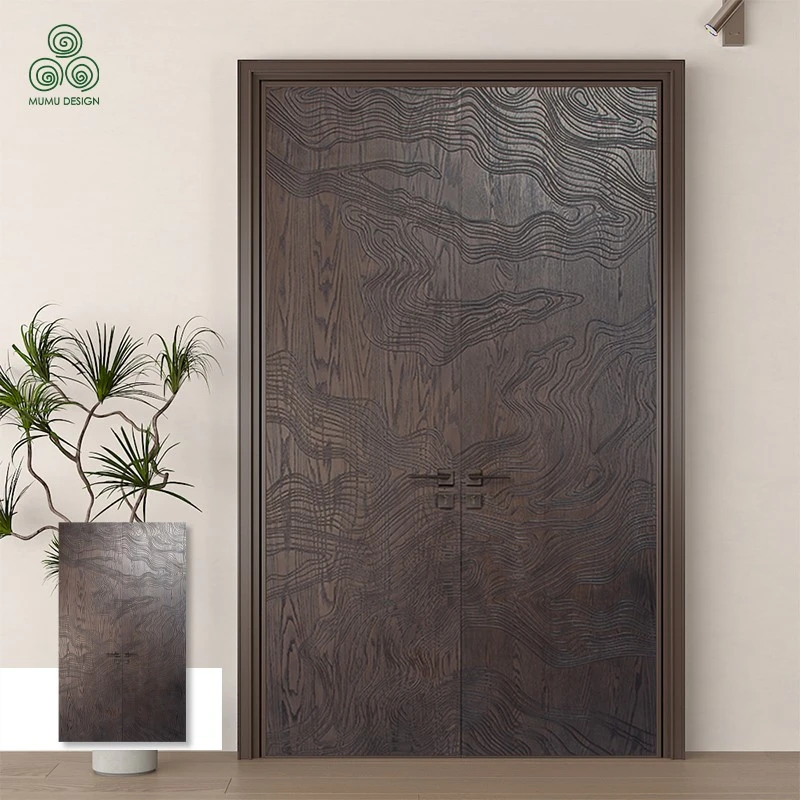
It's worth noting the distinction between solid wood and composite wood doors. True solid wood doors are made from single or finger-jointed solid wood for both the frame and core, resulting in higher costs. At MuMu Design, our solid wood doors use premium solid wood materials (such as oak, walnut, pine, etc.), subjected to proper drying processes and surface treatments (like clear varnish or wood wax oil). These doors offer excellent abrasion resistance, impact resistance, and stability against warping or cracking, capable of withstanding daily wear and tear. With proper maintenance (e.g., regular cleaning and avoiding moisture exposure), solid wood doors can last for decades, offering exceptional long-term value.

Complex Manufacturing Processes
The second major factor contributing to the high cost of solid wood doors is their intricate and meticulous production process. Transforming raw timber into a finished door involves dozens of steps, each requiring skilled craftsmanship and stringent quality control, all of which add to the final price.
High-quality solid wood doors often use a multi-layered construction to prevent deformation. Layers of wood are carefully dried, cut, and bonded in a crisscross pattern to enhance stability and reduce the risk of cracking. This process, while costly, significantly improves durability. For instance, producing a multi-layered solid wood door involves material selection, cutting, drying, splicing, pressing, sanding, and finishing-each step requiring specialized equipment and skilled labor.
Surface treatment also plays a significant role in pricing. Common closed-paint finishes are less expensive but conceal the wood's natural grain. In contrast, high-end solid wood doors often use open-paint techniques to preserve the wood's texture and tactile quality, adding $70-$112 to the cost per door. Baked-paint finishes are even more complex, requiring multiple rounds of sanding, priming, topcoating, and polishing-often repeated 6-9 times over two weeks-further driving up prices.
Material waste during production is another hidden cost. Natural wood has imperfections like knots, color variations, and mineral lines. To achieve a uniform aesthetic, manufacturers must rigorously screen raw materials, with rejection rates as high as 20%-30%. These losses are factored into the final price, especially for rare woods with stricter selection standards.
Additionally, rising environmental standards increase production costs. Adhesives and coatings meeting E0 or F4-star environmental standards cost 2-3 times more than standard materials, and formaldehyde-free processes require specialized equipment and controlled environments. As consumer demand for eco-friendly products grows, solid wood doors meeting these standards are pricier but increasingly popular.

Brand Premium and After-Sales Service
The third key factor behind the high cost of solid wood doors is brand value. The final price consumers pay includes not only manufacturing costs but also intangible factors like brand prestige, which can account for 40%-60% of the retail price.
Brand premiums are particularly evident in the high-end market. Well-known brands may charge 20%-50% more than lesser-known competitors, even for doors with similar materials and craftsmanship. This premium reflects not only market positioning but also investments in design, research, after-sales service, and quality assurance.
Design and style also influence pricing. Minimalist solid wood doors, with simpler shapes and lower processing demands, are more affordable. In contrast, intricately carved European or Chinese-style doors require additional manual carving or CNC machining, increasing costs. Non-standard sizes (e.g., oversized or extra-wide doors) can cost 30%-100% more than standard models due to the inability to mass-produce them. Consumers are essentially paying for these customized design elements.
Installation and after-sales service are often overlooked but significant costs. Reputable solid wood door brands typically offer professional measurement, installation, and maintenance services. While these add to the overall expense, they ensure a perfect fit and prevent issues like warping or cracking due to improper installation. In contrast, cheaper doors may exclude these services or charge extra, so consumers should factor in these hidden costs when comparing prices.
Cost Comparison with Other Door Types
To fully understand the high cost of solid wood doors, it's helpful to compare them with other common door materials. This comparison highlights the value of solid wood doors and aids consumers in making informed choices based on their needs.
The price difference between steel-wood doors and solid wood doors is stark. Market data shows steel-wood doors typically cost 30%-50% of a solid wood door's price. This gap stems from differences in materials and production: steel-wood doors use cold-rolled steel frames filled with honeycomb paper or composite wood, covered with PVC film or basic paint. These materials are inexpensive and suited for mass production. Solid wood doors, however, require more manual intervention, resulting in lower production efficiency but superior quality. While steel doors excel in fire and theft resistance, they lag in insulation, soundproofing, and aesthetics compared to solid wood.
Solid wood composite doors, a close relative of solid wood doors, are strategically priced. High-quality composite doors feature a solid wood frame with natural wood veneer, closely resembling solid wood doors in appearance, with prices ranging from $168 to $420 per set-about 50%-70% of a pure solid wood door. These doors balance cost and performance, using lightweight woods like white pine for the core, laminated with MDF and wood veneer, and formed through high-temperature pressing. They resist deformation and are lighter, though some high-end composite doors with premium veneers (e.g., walnut or cherry) and refined craftsmanship can cost upwards of $700, rivaling mid-range solid wood doors.
Multi-layered solid wood doors are priced closer to pure solid wood doors, typically 20%-40% more expensive than standard composite doors. These doors use multiple layers of crisscrossed solid wood panels, retaining the natural feel of solid wood while improving stability through structural design. Their higher cost reflects the use of more solid wood (albeit in smaller pieces) and complex drying and pressing processes. For consumers seeking solid wood's texture on a budget, multi-layered doors are a solid compromise.
Price and Feature Comparison of Different Door Types
|
Door Type |
Average Price Range (USD/Set) |
Key Advantages |
Key Disadvantages |
|
Pure Solid Wood |
$280-$2,100 |
Natural texture, durable, repairable |
High cost, prone to moisture-related deformation |
|
Multi-Layered Solid Wood |
$210-$840 |
Good stability, close to solid wood texture |
Splicing marks may affect aesthetics |
|
Solid Wood Composite |
$168-$700 |
Affordable, resistant to deformation |
Less durable, cannot be repeatedly sanded |
|
Steel-Wood |
$112-$350 |
Fire/theft-resistant, low cost |
Cold texture, poor soundproofing |
How to Choose a Cost-Effective Solid Wood Door
With a clear understanding of why solid wood doors are expensive, the next step is making a smart purchasing decision within your budget. Here are practical tips to help you select the best solid wood door for your needs.
Balance Material Choices: Instead of chasing the most expensive woods, choose materials based on your environment and decor style. For dry regions or bedroom doors, mid-range options like rubberwood or ash (priced at $280-$490 per set) are sufficient. For humid areas like bathrooms or kitchens, opt for moisture-resistant teak or specially treated multi-layered solid wood doors, which may cost 30%-50% more but offer longer lifespans. Beware of "$70 solid wood doors," which are often made from low-quality birch or counterfeit materials, compromising precision and durability.
- Evaluate Craftsmanship: Avoid overpaying by learning to assess a door's quality. Check if the door's edge shows solid or finger-jointed wood (not composite); ensure the surface grain is natural and continuous (veneered doors may have repetitive patterns); tap the door to hear a solid, uniform sound (hollow or underfilled doors sound empty); and look for mortise-and-tenon joints, a hallmark of high-end craftsmanship. For surface treatments, open-paint finishes highlight natural wood beauty but cost more than closed-paint options-decide if the aesthetic is worth the premium.
- Consider Long-Term Value: High-quality solid wood doors can last 15-20 years and can be refinished (sanded and repainted) to look new, making them more cost-effective than cheaper doors that need replacement every 5-8 years. Check warranty periods (premium doors typically offer 3-5 years) and after-sales service responsiveness. Classic designs also outlast trendy styles, remaining timeless as decor trends evolve, making them a better long-term investment.
- Strategic Pairing: Optimize your budget by prioritizing high-end solid wood doors (e.g., black walnut, $1,120-$1,680 per set) for public spaces like living rooms to elevate the overall aesthetic. For private areas like bedrooms or studies, opt for cost-effective solid wood composite or multi-layered doors ($350-$560 per set). This "tiered" approach balances aesthetics and economics.
Partner with a Reliable Solid Wood Door Manufacturer
MuMu Design, headquartered in Dongguan, China, is a leading manufacturer of wooden doors and custom wood solutions with over 20 years of industry experience. We specialize in producing high-quality indoor and outdoor wooden furniture and decorative materials, including solid wood doors, wall panels, flooring, ceilings, and custom furniture. With an extensive material library and advanced customization capabilities, we provide tailored solutions for global distributors, designers, and project owners. Contact us today for free design services, and we guarantee a prototype within three days of design confirmation. E-Mail: Jerry@mumu-ing.com
